Making Hunger Great Again
Jake Bernstein ’29
Since the Roman Empire, tickets have been used as a way to receive a service, whether it is a concert, a raffle, or a meal. In addition to all of these items, tickets or vouchers are a way the U.S. government provides food for its citizens who can’t afford it. So what are these benefits, and why have they been a frontline of the fight for our country's budget?
The Supplemental Nutrition Assistance Program (SNAP) is a program under the Department of Agriculture (USDA) that gives certain amounts of money to low-income families or individuals (currently around 41.7 million people) to spend on food, the amount of which is based on the income of the family or individual. How it works is at the beginning of each month, a certain amount of money is loaded onto an individual's Electronic Benefit Transfer (EBT) card in two forms: food or cash. The money allocated will come from the Temporary Assistance for Needy Families (TANF) program, which can be used for costs ranging from rent to clothes. What we will be focusing on today is the money allocated for food. This money comes from a family's SNAP benefits and can only be used for purchasing certain grocery store items.
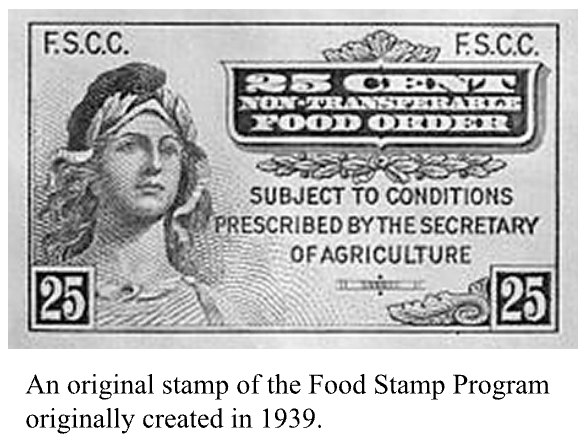
In the SNAP program, the government places restrictions on what can be bought with this money to ensure it is being used for the right purposes. This includes frozen and fresh meats and vegetables, dairy products, breads and other grains, liquids like water and juice, snacks, stable foods like eggs and oil, and some prepared food based on your benefits. These benefits can not be used on products like tobacco, alcohol, most hot and prepared foods, household items like dog food and cleaning supplies, vitamins, medicines, gardening supplies, and items used for food preservation, like jars and tupperware. Although created in a similar time period, SNAP benefits were not created to limit food consumption during WWII. According to the USDA website, the idea for the first Food Stamp Program (FSP) originated in 1939 as a part of the New Deal. It is credited to many, most notably Secretary of Agriculture Henry Wallace and the program's first Administrator, Milo Perkins. It was created on the principle that people can sell surplus food to get different types of stamps of different amounts, with each stamp being used to sell a certain type of product. Although the program was created in 1939, it was not until 25 years later, with the Food Stamp Act of 1964 under President Lyndon B. Johnson, that it was made an official federal program. In addition to being certified as a federal program, this act increased the types of food that could be bought with food stamps, as well as eliminating the need to pay for food stamps, allowing more low-income Americans to access them. With the passing of the Food, Conservation, and Energy Act of 2008, the program would officially be named the Supplemental Nutrition Assistance Program (SNAP).
At the time of this writing, the government shutdown has ended, which means government employees have gone back to work and funding for programs has been restored. In addition to this, the bill reopening the government included funding for SNAP benefits through September 2026. While money has been restored and users can once again use SNAP to buy food, it is important to understand why and how these benefits became a political tool and how they were used as such. This fight can be traced back to Trump’s domestic policy bill, which was passed in July and will cut the SNAP budget by nearly $187 billion over a decade. While the government shutdown took effect at 12:01 AM on October 1st, the money for the October benefits had already been distributed and recipients would not feel the impact till November.
As the shutdown progressed, it became clearer that November benefits would not be issued. As a result, the USDA told states to pause benefits and to undo any steps taken to issue them. Outraged by the usage of necessary benefits as a political power play, a coalition of states led by New York and California sued the administration to fund the benefits, as well as several federal judges who ordered the USDA to fund the November benefits. After the administration appealed on the grounds of judicial overreach, an appeals court temporarily blocked the lower court's order before siding with the district court in forcing the administration to fund SNAP for November. This would again be stopped after the Supreme Court ordered a pause on the order to allow the Appeals courts to take their time when reviewing the case. Although this fight has ended and benefits have been restored, this underlines the far-reaching consequences of partisan fighting and how so many innocent people (41.7 million) can get caught in the crossfire.